Posts

Showing posts with the label jena

New positions in Jena and general about looking for jobs as a linguist
Image
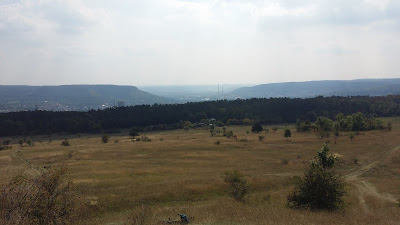
Jena from afar (Jena is in the valley of the plateau) Central Jena The Max Planck Insitute for the Sciences of Human History in Jena has just announced 2 PhD positions and 1 postdoc, and the  Friedrich-Schiller-Universität Jena has also announced 1 PhD position . Follow the links for more info. In light of that, I wanted to highlight some other relevant resources for those of us who are looking for a PhD position, or considering what to do after having finished the PhD or masters degree. Linguists Outside of Academia There's a mailing list for linguists who are working outside of academia, or who want to work outside of academia.  Welcome along to Linguists Outside Academia! We are a motley crew of self-identifying linguists with tenuous connections to the groves of academe. This includes trained linguists who are currently out of work, as well as people on shaky fixed-term academic contracts, and others who have 'linguistic' type jobs in non-academic set...

Maybe some isolates are creoles? pt 2

Image
It has not escaped me that a while ago we asked the question "maybe the language isolate Bangime is actually an old creole?" * and now the MPI-SHH in Jena has a research project on the genetics of Bangande people (Bangime speakers) and they also had a mini-African symposium with language experts on Bangime and Dogon.. and now later this year there's a workshop on "Language shift and substratum interference in (pre)history "... Interesting... I will be watching this space. /Cheeky-Cheekvig *Basically, they've got lexicon from the surrounding Dogon and from the perspective of a typological questionnaire (NTS), the language "lacks" a lot of grammatical things, including similarities with Dogon languages. Also, there's suggestions that they used to be slaves of the Dogon.

Workshop in Jena on Austronesian linguistics, archeology and genetics

Image
Last week at the new MPI for the Science of Human History in Jena, there was a two-day workshop on the peopling of island Southeast Asia and the Pacific, organised by Russell Gray, Lisa Matisoo-Smith and Simon Greenhill.  It was divided between talks on archeology, linguistics and genetics, with a couple of others on computational modeling from anthropology and ecology.  The titles and abstracts of talks are  here .  Here is my brief and perhaps slightly garbled summary of the talks. Archeology Bob Blust said in his talk that linguistics can make predictions for archeology, such as the presence of Neolithic rice remains in Taiwan, because Austronesian languages originated in Taiwan, and Proto-Austronesian is reconstructed as having many terms for rice.  This prediction turned out to be vindicated, such as by japonica rice grains found at the 4500-5000 BP site at Dabenkeng.  In this spirit, some archeology talks were on migrations which we kn...

The Closing Conference of the MPIEVA Linguistics Department - Diversity Linguistics: Retrospects and Prospects

Image
This week was the closing conference of the linguistics department of the Max Planck Institute for Evolutionary Anthropology in Leipzig - Diversity Linguistics: Retrospects and Prospects. (Written about before with much excitement by Hedvig  here and here .) The talks were wonderful, presenting results of work done over many years.   This is a partial and idiosyncratic summary of my experience there, which has to leave out talks that I couldn't get to due to schedule clashes in the program.  They are listed here roughly by chronology, or by theme.  You can see the list of all talks and access their abstracts here.   A set of photos of the conference is here . Bernard Comrie summarized the achievements of the department over the past seventeen years, probably the main one being the World Atlas of Language Structures first proposed and built by Martin Haspelmath and David Gil.   This database set the precedent for linguistic databases tha...