Posts

Showing posts with the label challenge

Thoughts and results from the generative side of linguistics

Image
Hello everyone, This posts serves to show non-generativist readers of this blog things going on in the generative sphere that they might like to know about. Mainly: grand challenges, the future of the field comparisons between genetic research into human history and historical linguistics large cross-linguistic databases Sometime ago, we wrote about the conference that was held in Athens in 2015 titled: Generative Syntax in the Twenty-First Century: The Road Ahead It was a conference that gathered many people and were very important matters were discussed, matters that are relevant both to those who describe themselves as "generativists" and those of us who don't. They had a round-table discussion, and the discussants also submitted written statements prior to the event. These can still be accessed and read, and provide insights into what people consider as crucial issues. Some of the links to these files had since broken, I contacted one of the o...

When someone calls for the study of language to become more integrated

Image
Read this piece by Christiansen & Chater on a new emergent field of study that integrates different sub-disciplines of language sciences. See also:  Can we get to the post-generativist-vs-functionalist-war generation yet?  ( - I'm bored with the conflicts of my elders) and Grand challenges of current linguistics

Grand Challenges of Linguistics pt 4: response from readers

Image
Continuing on the series "Grand Challenges of Linguistics" , I thought I'd share responses that came in on twitter ( you can tweet your own response here ). These are questions that occupy researchers of the field today. What do you find to be the most important and interesting questions and challenges of your research field? Nick Enfield said : "Focus on answering research questions not on defending methods/approaches" "Take seriously the connections between grammar and social interaction" Piers Kelly said:  "Work out how to locate living breathing humans in the data. If linguistics is not a humanist science, we've lost the mission!"  "Address structural biases against cross-disciplinary research. Don't just affirm that cross-disciplinarity is a 'good thing'." Simon Greenhill said:  "Scaling up the data and methods to detect & quantify the global, regional, & familial processes s...

Generative and non-generative ideas of the current questions and aims of linguistics

Image
This is a blogpost about the way that different linguists see the great challenges and aims of linguistics, it's full of quotes that I hope will prove illustrative. The quotes are taken mainly from here   and here , you can also go there to read more. As usual, you're more than free to skim and scroll, there's quite a few quotes this time. On this blog we're interested in discussing  what the "Big Research Questions" in linguistics  are, and also we've been interested in getting past the functional-fenerative divide that often is very destructive.  Two of our readers even commented that the inflammatory "debates" of the Great War are "profoundly unattractive" and that they had left that part of linguistics intentionally because of it's unproductive nature. Here's Haspelmath describing the situation: It is not hard to see that linguists who work on linguistic diversity tend to fa ll into two very rough sociological g...

Illustrating current questions in research on linguistic diversity

Image
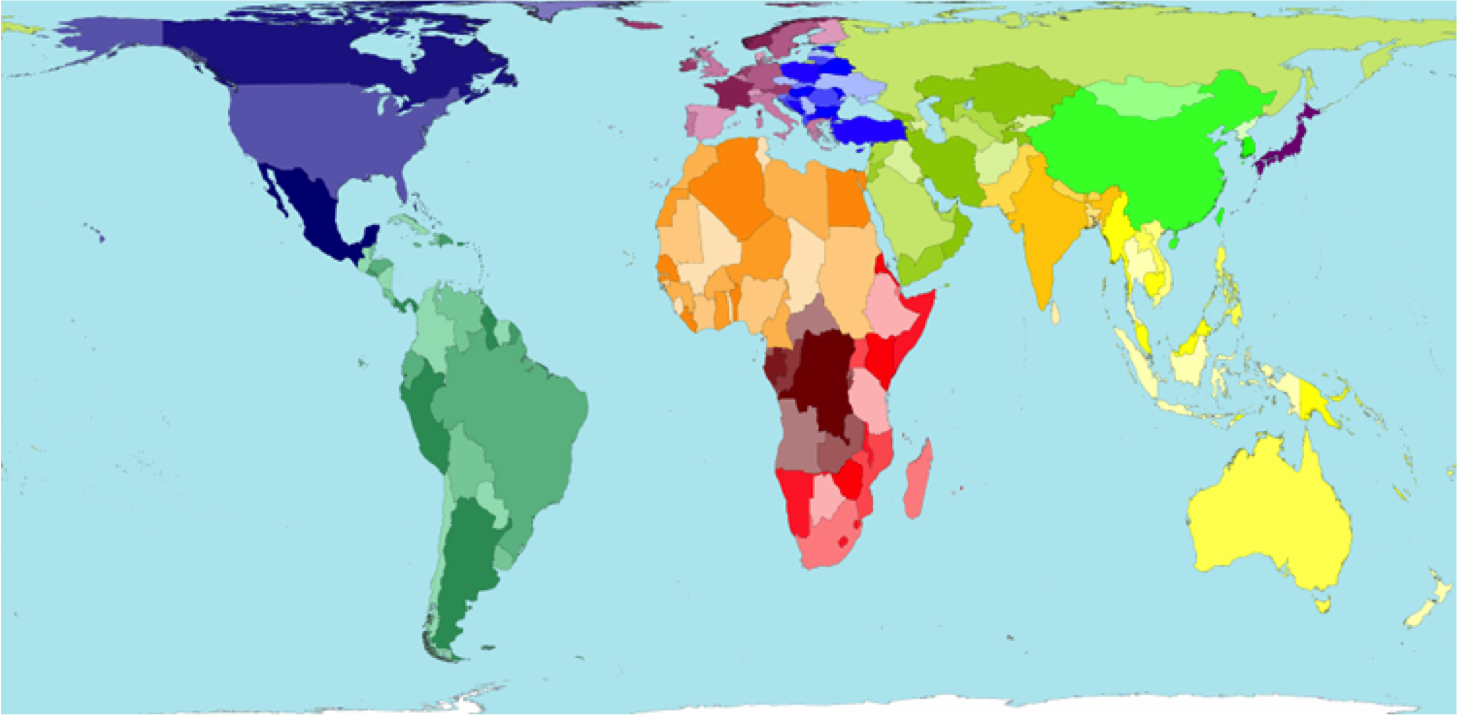
In relation to the previous post about the grand challenges of current research in linguistics  I'd like to bring up four questions that are currently the focus of much contemporary research in linguistic diversity, and then illustrate them with maps. They are as follow: Why are there so many languages in some places and few in others? Why do some languages have more internal variation than others? Why are there so many language families and isolates in some places and not in others? Why are languages in certain areas so similar to each other despite not being related to each other, whereas other languages that are in contact are less similar?  What is the possible design space of language and why do languages cluster in that space the way they do?  To illustrate these questions I'd like to present you with a series of maps.  I really recommend you reading this post here about things to think about when you're reading maps of languages. Fi...

The Grand Challenges of Current Linguistics: what would you list?

Image
At the SLE conference (Societas Linguistica Europaea) in Poznań 2014 there was a round table discussion on where current linguistics is heading and what the most important problems are that we as a file need to tackle. It was called "Quo vadis linguistics in the 21st century" and the participants were very interesting and experienced researchers.  I'd like to share some of my own thoughts and invite you to share yours with us. The brilliant blog Diversity Linguistics Comment made a longer post where you can read what the all participants presented, what they see as the most important issues right now . It is a very good read, and not that long. Anyone interested in linguistics should read and really take in what these people are saying. One of the participants didn't contribute a text to that compilation blog post, instead he contributed with a video. This is t he excellent linguist Martin Hilpert  of  University of Neuchâtel. He makes videos regularly on hi...